Why do Christians fast during Lent?
The Book of Common Prayer designates the weekdays of Lent and Holy Week (except March 25, the Feast of the Annunciation), along with most Fridays of the year, as days of “special devotion” with “special acts of discipline and self-denial,” which would normally include fasting (BCP p. 17). Some form of fasting has long been one of the central ways Christians have practiced this devotion.
Jesus himself began his ministry by fasting (Matthew 4:1–11) and teaches about fasting in the Sermon on the Mount, saying, “When you fast…” (Matthew 6:16). Fasting, whether whole or partial abstinence from food, is always spiritual in purpose: to learn the difficult truth that “man does not live by bread alone, but by every word that proceedeth out of the mouth of God” (Matthew 4:4).
What fasting practices and disciplines are part of Lent?
You may find it helpful to think first about your Lenten fast, and second about what discipline you might take on. Traditional fasting practices include:
-
Forgoing meat during the weekdays of Lent
-
Fasting from one or two meals a day (Wednesdays and Fridays are traditional days)
-
Fasting from practices that serve as spiritual or emotional “crutches,” such as extended television viewing, desserts, or internet use—often with the intention of continuing the fast after Lent
-
Fasting before receiving Holy Communion on Sundays as a way to spiritually prepare
In addition to fasting, Lent is a time to take on spiritual disciplines. When discerning a discipline, take an inventory of your spiritual life and prayerfully ask what the next small step might be. Examples include:
-
Praying Morning or Evening Prayer, or Daily Devotions (BCP pp. 136–140)
-
Praying Compline (BCP p. 147) together as a family or couple
-
Making a daily examination of conscience in preparation for Confession
-
Giving part of what you would normally spend on entertainment to the Church or to the poor
Any of the clergy would be pleased to provide further direction.
What is expected on Ash Wednesday?
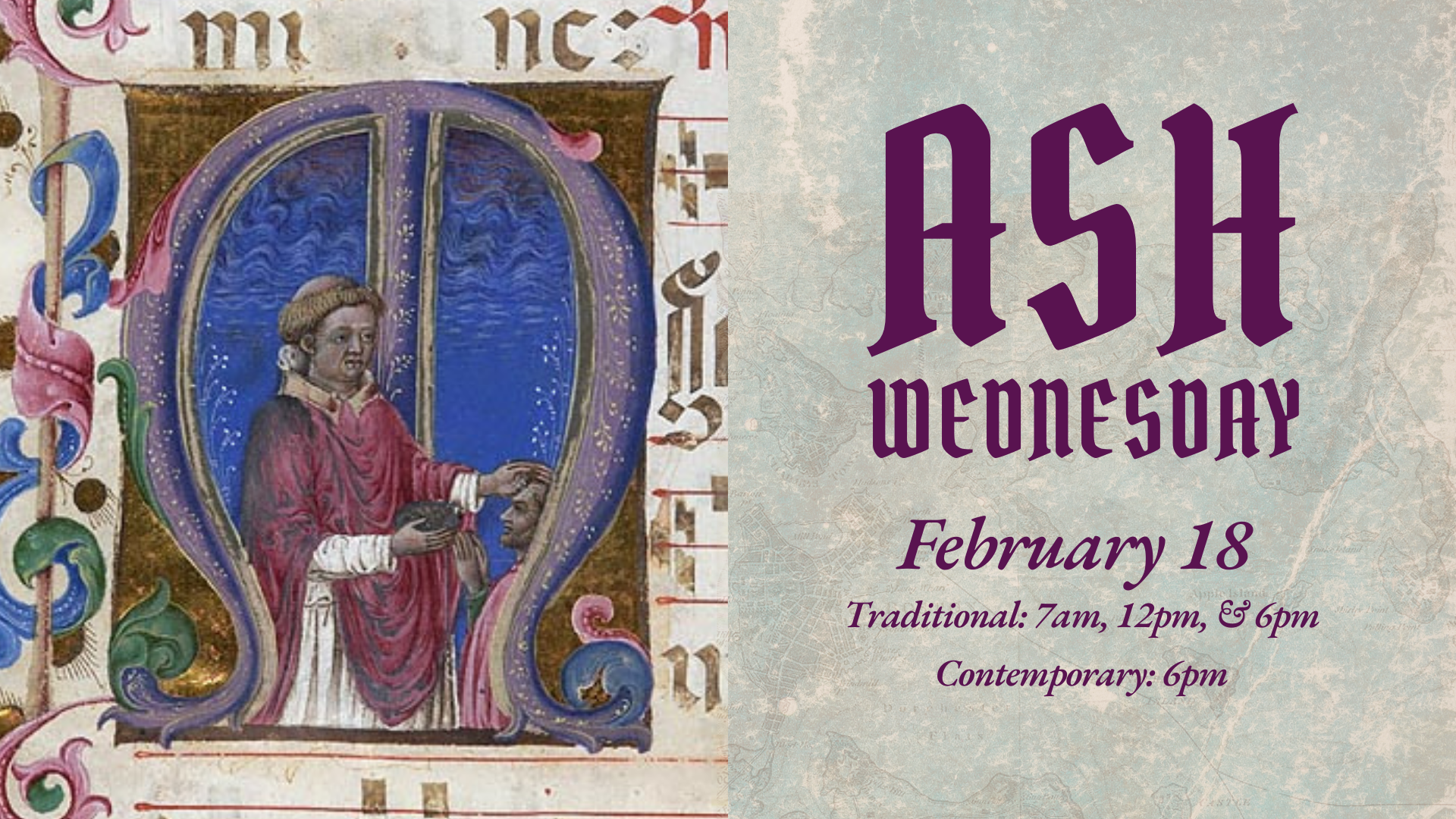
Ash Wednesday is one of two days in the Church Year—the other being Good Friday—when all Christians who are physically able are urged to observe a total fast. This traditionally includes abstaining from all food (solid or liquid, except water) during the day, and eating only a simple, meatless meal later in the day, ideally after receiving Holy Communion.
How is worship different during the season of Lent?
The Church’s worship during Lent is simpler and more austere. The word “Alleluia” is not used, and the Gloria in Excelsis is not sung (except on Maundy Thursday). Flowers are removed from the altar, and the liturgical color is violet—a sign of penitence and hope.
These changes are meant to help us focus more intently on the spiritual disciplines of Lent: self-examination and repentance; prayer, fasting, and self-denial; and reading and meditating on God’s Holy Word.
What is sacramental confession?
One of the gifts of the Church’s spiritual tradition is the practice of sacramental confession (see James 5:12). In confession, one examines one’s life honestly and names sins in the presence of a priest in order to receive counsel, direction, and absolution—the authority given by Jesus to declare God’s forgiveness (see John 20:23).
Is confession required in the Anglican tradition?
Anglicans have always understood confession as a gift to be received, not something to be required. There is great freedom and healing in bringing our sins into the light and naming them in the presence of a Christian minister (see 1 Peter 2:9).
When is confession available during Lent?
Priests will be available to hear confessions by appointment throughout Lent, as well as Monday through Wednesday in Holy Week.
The liturgy for Confession can be found on pages 447–448 of The Book of Common Prayer. Guides to help prepare for Confession are available from the church office upon request.